


Overview
The School of Electrical Engineering (SEE) at Manipal Institute of Technology (MIT), Manipal, a constituent institute of Manipal Academy of Higher Education (MAHE), is a multidisciplinary school that brings together faculty expertise across Electrical & Electronics Engineering, Electronics & Communication Engineering, VLSI, Instrumentation, Cyber-Physical Systems, and Biomedical Systems under one academic umbrella. Built on strong foundations of teaching excellence, innovation, research, and industry engagement, the School provides an interdisciplinary learning environment aligned to contemporary industry requirements.
The School offers a globally aligned curriculum strengthened by hands-on learning, modern laboratory infrastructure, international collaborations, and access to advanced research facilities. A comprehensive range of undergraduate, dual-degree, postgraduate, and doctoral programs is supported by experienced faculty and well-established research groups working on both fundamental and applied engineering challenges. Faculty and students actively contribute through funded research projects, high-impact publications, patents, technology transfer, and consultancy, addressing contemporary challenges in energy, healthcare, semiconductor technology, control and automation, communication, and smart systems.
The programs are accredited by national and international bodies, including NBA and IET, ensuring alignment with global academic and professional standards. Graduates of the School are well prepared for careers in leading organizations including ABB, Siemens, Intel, GE Healthcare, Texas Instruments, Tata Power, STMicroelectronics, Medtronic, Baxter, Stryker, Samsung, Lenovo, NXP Semiconductors, Honeywell, Boeing, Schneider Electric, ARM, Goldman Sachs, Reliance, MRPL, ITC, Oracle, Deloitte, Microchip Technology, Cisco, Mahindra & Mahindra, Philips, Bosch, and also pursue higher studies and research at premier institutions worldwide.
Vision and Mission
Vision:
Excellence in electrical engineering education through continuous learning, research, innovation and teamwork.
Mission:
To nurture qualified, motivated and competent graduates in electrical and electronics engineering who demonstrate leadership, possess strong foundational knowledge with advanced competencies in biomedical systems, communication technologies, cyber-physical systems, instrumentation and VLSI technology.
To advance research and innovation in electrical, electronics and allied fields aligned with emerging technologies, while upholding ethical standards, contributing to industry advancement, supporting the scientific community and benefiting society.
Programs
The School of Electrical Engineering offers the programs listed below.
The B.Tech in Electrical & Electronics Engineering is a four-year undergraduate program started in 1960. It provides strong foundations in electrical and electronics disciplines, blending core electrical engineering with contemporary electronics and computing courses, supported by laboratory work and projects. The curriculum covers power and energy systems, embedded systems, control systems, signal processing, EV technology, and AI/ML applications. The program is accredited by NBA and IET (UK) .
The B.Tech in Electronics and Communication Engineering (ECE) is a four-year undergraduate program focused on building strong foundations in electronics and communication systems, with advanced coverage in analog/digital electronics, VLSI design, nanotechnology, wireless and fiber-optic communication, embedded systems, multimodal signal and image processing, information theory, coding, and IoT. Program emphasizes laboratory work, industry-oriented projects, internships, and capstone experiences. AI/ML and data-driven signal processing are embedded across the curriculum.
The institute is accredited with NAAC A++ . The ECE program is accredited by NBA and IET (UK). Students have opportunities for dual-degree programs with the University of Surrey (UK) and Australian National University (ANU) , and semester-abroad programs with Montana State University (USA), NCKU Taiwan, and other global universities.
VLSI Design & Technology
Cyber-Physical Systems
Instrumentation
Biomedical Engineering
The B.Tech in Electronics Engineering aims to develop competent electronics engineers with strong analytical and design skills and offers focused pathways in the following specializations:
The curriculum provides breadth in core electronics and depth through industry-oriented learning and research exposure in VLSI/semiconductor technologies, signal/image processing, ML/AI healthcare applications, biocompatibility testing (where applicable), instrumentation and control, and cyber-physical systems . Graduates are prepared for roles across chip design, verification, embedded intelligence, IoT, smart automation, autonomous technologies, medical device development, clinical instrumentation, and industrial measurement systems.
M. Tech in Biomedical Engineering: A two-year postgraduate program, learner-centric, industry-oriented, and research-driven, supporting careers in biomedical industry and research.
M.Tech in Medical Informatics: A two-year multidisciplinary postgraduate program bridging healthcare, computer science, and statistics, focused on medical data visualization, AI/ML/DL, clinical decision support systems, and project/research-based learning supported by industry experts.
M.Tech in Electronics Engineering (Digital Electronics and Communication): A two-year postgraduate program supported by laboratory infrastructure in analog circuits, digital systems, communications, microprocessors, programming, MATLAB, microwaves, PCB, DSP, and power electronics.
M. Tech in Electrical Engineering (Electric Vehicle Technology): A two-year, industry-oriented postgraduate program (start year – 2022) focused on EV powertrains, batteries/BMS, charging infrastructure, power electronic converters, with multidisciplinary exposure across instrumentation, embedded systems, communications, analytics, and AI-enabled mobility. Supported by the Practice School model for internships/projects (Practice School linkage year – 2023). Typical recruiters include Tata Motors, Mahindra & Mahindra, Volvo, Mercedes-Benz, Toyota Kirloskar, Ather Energy, Bosch, ABB, GE, L&T, Schneider Electric, and EV-focused startups (since inception).
M.Tech in Electronics (Embedded Control & Automation): A postgraduate program designed to meet industry and R&D needs in control engineering and instrumentation. Thrust areas include navigation guidance and control, adaptive control, advanced/robust/optimal/H-infinity control, system identification, modelling labs, process control labs, and simulation labs. Graduates have opportunities in process/manufacturing sectors and government organizations such as ISRO, DRDO, NAL, HAL.
M.Tech in Electronics Engineering (Microelectronics): A two-year postgraduate program covering physical electronics, DSP applications, biosensors, HDL, optimization, computational electromagnetics, VLSI technology, design and lab, as well as embedded system design, transistor physics, and advanced network analysis. Includes seminars, soft-skills, R&D exposure, and project work.
M. Tech in Electrical Engineering (Power Electronics & Drives): A two-year postgraduate program (start year –2008) offering advanced training in power converters, drives, energy conversion, and control, with applications in renewables, electric mobility, and energy systems. Includes electives, mini-projects, internships, industry visits, guest lectures, and support for research publication. Typical recruiters include ABB, Intel, GE, GMR Energy, L&T, Philips, Wipro, Schneider Electric, Reliance Infrastructure, Royal Enfield, HBL Power Systems, Tata Elxsi, and Honeywell (since inception).
This dual degree arrangement enables students to undertake the first two years of the B. Tech in Electronics and Communication Engineering at MIT Manipal, followed by two years at the Australian National University (ANU), Australia, leading to the award of the Bachelor of Engineering (Honours) with a major in Electronic and Communication Systems. On completion of the four-year pathway, students earn two degrees—one from MIT Manipal and one from ANU—enhancing their international academic and professional standing.
School of Electrical Engineering offers a dual degree program that allows students to achieve two undergraduate degrees within four years. The program begins with students enrolling in and successfully completing the first two years of the Bachelor of Technology (BTech) program in the Electrical and Electronics Engineering stream at the Manipal Institute of Technology (MIT). Students then transfer to Macquarie University to complete the final two years of the Bachelor of Engineering (Honours) program. This unique pathway equips students with dual qualifications from MIT and Macquarie University, both renowned institutions, broadening their academic scope and enhancing their professional opportunities on a global scale.
Click here for Program Structure for B. Tech programs (2026 Scheme).
Specialized Labs
The School is equipped with specialized laboratories supporting UG/PG teaching, advanced research, and consultancy.
The Centre for Semiconductor Device Fabrication (CSDF) Facility is a comprehensive ecosystem designed to connect, create, and fabricate advanced semiconductor devices while fostering skill development and research innovation. The facility offers robust infrastructure supported by a controlled cleanroom environment, enabling a complete fabrication workflow that includes lithography, thin-film deposition, etching, oxidation, and annealing, ensuring industry-aligned process integrity and repeatability. CSDF is equipped with state-of-the-art tools such as photolithography units, physical vapor deposition (PVD) systems, oxidation and diffusion furnaces, wet etching bays, and advanced probe stations with semiconductor analyzers capable of I–V, C–V, and pulsed measurements, allowing precise device characterization. The facility supports the fabrication of a wide range of devices, including MOS capacitors, diodes, transistors, thin-film transistors (TFTs), sensors, and other experimental devices, making it suitable for both academic and applied research.
The Advanced Antenna and Microwave Laboratory is a well-equipped facility dedicated to high-frequency RF, microwave, and millimeter-wave experimentation. It features a high-performance Vector Network Analyzer (VNA) with a frequency range from 300 kHz to 40 GHz, enabling precise S-parameter measurements, impedance characterization, and reflection and Transmission characteristics of microwave devices. The laboratory also includes a fully shielded anechoic chamber operational up to 40 GHz, designed for accurate radiation pattern, gain, polarization, efficiency, and radar cross-section measurements. The facility supports comprehensive testing and characterization of various antennas, waveguides, transmission lines, filters, couplers, amplifiers, and other microwave and RF components, catering to advanced teaching, research, and industry-oriented projects.
At present, the School of Electrical Engineering possesses Computer Numerical Control (CNC) machines for PCB and antenna fabrication. Our aim is to initiate the PCB and Antenna Fabrication services. So, we wish to expand these facilities into a functional service unit that can cater to the needs of students, faculty members, and the research community for prototype development, academic projects, and research activities. This initiative will enable timely and cost-effective fabrication of PCBs and antennas for student and research projects, enhance hands-on learning opportunities for students in Electronics circuit design, RF, and communication systems and promote interdisciplinary research, innovation, and consultancy activities within/ outside the institution.
The research in the area of Advanced Process Control is widely open with many challenging problems to be addressed using Machine Learning techniques. Chemical processes are highly nonlinear in nature. Capturing nonlinear dynamics will improve the control loop performance in real-time applications. Machine Learning-based modeling techniques and controller design significantly improve closed-loop performance. Recently, our team started using the ML for modelling the Batch reactor and designed various nonlinear controllers for closed-loop tracking. Support Vector Machine concepts were used for the fault classification with real-time data captured. At present, the research team is actively working on cloud based various multi variate reinforcement learning based NMPC. This research lab is recognized by VTU, Belagavi as an internship center for VTU affiliated engineering college students. Active collaborative works and publications are happening with West Virginia University-USA, Annamalai University-India and Anna University.
The Product Genesis Lab functions as an end-to-end innovation ecosystem that transforms ideas into validated product concepts. The process begins with ideation and market research, where needs or gaps are identified through brainstorming, user research, and real-world observations, followed by feasibility analysis and market assessment to evaluate demand, competition, and pricing. This leads to proof-of-concept and prototyping, starting with a basic prototype to validate technical feasibility and user appeal, and progressing to a functional prototype for usability testing and design refinement. The next phase involves design and development, including electronic circuit design and simulation, PCB layout and fabrication, and software or firmware development where required. Finally, the product undergoes rigorous testing and validation to ensure functionality, performance, safety, and compliance with relevant standards, including environmental, stress, and electromagnetic compatibility testing.
The Medical Devices Lab at the School of Electrical Engineering, Manipal Institute of Technology, serves as a vibrant hub for healthcare innovation, fostering interdisciplinary research at the interface of engineering, materials science, and biomedicine. The lab actively engages UG, PG and PhD students in hands-on, translational research, supported by competitive funding from national agencies such as DST, SERB, ICMR, DHR, and BIRAC. Current research initiatives span advanced wearable sensors for Parkinson’s disease monitoring and post-stroke rehabilitation, portable bioprinting systems for wound healing, smart assistive devices, magnetocardiography, sweat analysis platforms, hemodialysis cartridges, CPR machines, and 3D cell culture and tissue engineering. Equipped with dedicated bacterial and animal cell culture facilities, the lab has demonstrated strong research outcomes through high-impact publications, patents, and the successful incubation of seven startups. In addition, the lab offers structured student internships and skill-based training programs, enabling seamless transition to industry and research careers. With a strong emphasis on ethical research, innovation, and societal impact, the Medical Devices Lab plays a pivotal role in advancing medical technology and nurturing future leaders in healthcare engineering.
The Physiological Acquisition Lab has been established with the objective of acquiring, processing, and analyzing diverse physiological signals for advanced healthcare applications. The center focuses on developing signal processing and AI/ML/DL-based analytical frameworks for understanding complex biological data. Current research activities include EEG-based imagined speech analysis and iris image–based substance abuse detection, supported by an ANRF-funded project. The lab integrates physiological data acquisition systems with machine learning and deep learning approaches to enable objective assessment, early diagnosis, and intelligent decision support in healthcare applications.
Established Centres / Major Initiatives
Government’s DoT selects Manipal Institute of Technology, Manipal for “100 5G labs Initiative” which has been awarded by Honourable Prime Minister on 27th October 2023 virtually from Indian Mobile Congress (IMC-23), Pragati Maidan, New Delhi. This momentous recognition positions Manipal Institute of Technology, Manipal, as a prominent hub for technology development, cementing its position at the forefront of India’s technological advancement in Telecommunications. The lab will be able to establish the 5G lab in association with DoT. The 5G lab equipment would include 5G Standalone infrastructure (mid-band), 5G SIMs, Dongles, an IoT Gateway, a Router, and an Application Server to meet the lab’s needs, along with a management dashboard.
The Center of Excellence for E-Mobility, established with L&T EduTech, offers cutting-edge training and research in EV technology. Equipped with advanced tools like Dspace MicroLabBox and BMS setups, it enables students to innovate in e-mobility. Industry-aligned courses, like "Foundations of EV and Hybrid Vehicles," boost career prospects with hands-on expertise.
MAHE (Manipal Academy of Higher Education) and Schneider Electric Bengaluru signed an MoU on June 17–20, 2022 to establish a MAHE Research Centre within Schneider’s Bengaluru R&D environment. This collaboration has established three industry-supported research labs focusing on Intelligent Technologies, Industry 4.0, and Sustainability. UG and PG students receive 5-month stipends to support their research involvement. The centre is equipped with an Industrial IoT Systems & Application Research Lab to support IoT, automation, and smart technology projects.
The Department of Instrumentation and Control at Manipal Institute of Technology, in partnership with ARK Infosolutions Pvt. Ltd., established the Centre for Excellence in Cyber Physical Systems (CPS) in 2020. The Centre advances interdisciplinary research and education at the nexus of embedded systems, sensing, networking, real-time computing, and control—where computation, communication, and control converge to transform how we interact with the physical world. It offers certification programs, integrates CPS content into undergraduate and graduate curricula, and runs targeted skill-development initiatives. The Centre also drives faculty upskilling, fosters industry collaborations and internships, and supports CPS focused startups. To date, it has contributed 30 research papers and 12 patents in sensor and smart transport technologies, enabled by collaborations with global partners such as ARK Infosolutions, Unity Technologies (USA), Emona (Australia), Liquid Instruments (Australia), Emsol, Entuple, Mew Technologies, and Power Lab Instruments.
Our PCB Assembly Teaching Line, developed with Enthu technology under the Centre for Excellence, Cyber Physical System, brings an industry grade workflow to the classroom in a compact, modular, and safety compliant platform. It covers end-to-end processes—stencil printing, SMT pick and place (0402–QFN), controlled reflow, through hole soldering, AOI, and rework—with each station instrumented for data capture and visualization. ESD safe benches, IPCA610aligned instructions, and a curated defect library support hands on training in solder quality, DFM/DFT, and troubleshooting. Configurable conveyors, swappable feeders, and fault seeded boards enable experiments in yield analysis, Cp/Cpk, line balancing, and Lean/Six Sigma, while an optional Industry 4.0-layer streams machine and sensor data for traceability, SPC, and digital twin exercises. With a compact footprint, lock safety, and modular lesson packs, the platform delivers authentic, end-to-end PCB assembly education and applied research.
At the Centre for Outdoor Studies (COS), Manipal Institute of Technology, MAHE, experiential learning extends beyond the classroom into natural and community environments. Through thoughtfully designed outdoor expeditions and immersive field experiences, students apply academic knowledge in real-world contexts while developing leadership, teamwork, resilience, environmental stewardship and problem-solving skills. The Centre offers credited courses in Outdoor Leadership, Nature Journaling and Himalayan Outdoor Leadership, providing students with distinctive opportunities for interdisciplinary learning and personal growth. By engaging with diverse landscapes, local communities and collaborative challenges, participants gain practical experience that enriches their academic journey. For more information visit our website www.centreforoutdoorstudies.com
Industry/Academic Connect
The School of Electrical Engineering fosters a strong industry–academia interface through consultancy, sponsored research, internships, industry-linked projects, and technology transfer—enhancing curriculum relevance and graduate readiness.
Key industry engagement includes collaborations with organizations such as Schneider Electric, L&T EduTech, ARK Infosolutions, and sector-leading recruiters across semiconductors, automation, healthcare technology, and energy systems.
- The school of Electrical Engineering has collaboration with IIT Bombay, Jadavpur university, IIT Madras.
- The collaborative work with Indian Naval Academy, BRNS and CDAC is ongoing.
- The school has MOU with University of Surrey, Macquarie University, ANU, Drexel university and Montan Universität Leoben (Technical University of Leoben) etc.
- Centre of Excellence for E-Mobility: This was established with L&T EduTech, offers cutting-edge training and research in EV technology. Equipped with advanced tools like DSpace MicroLabBox and BMS setups, it enables students to innovate in e-mobility. Industry-aligned courses, like "Foundations of EV and Hybrid Vehicles" boost career prospects with hands-on expertise.
- MIT-MAHE and Schneider Electric (Centre for Industrial Research in Intelligent Technologies) MAHE and Schneider Electric Bengaluru signed an MoU to establish a MAHE Research Centre within Schneider’s Bengaluru R&D environment. The Centre is equipped with an Industrial IoT Systems & Application Research Lab to support IoT, automation, and smart technology projects.
- Emona Instruments Pvt. Ltd., and Liquid Instruments, Australia, ARK info Solution, established a Cyber Physical system, Centre of Excellence, fostering capacity building, joint ventures, and regional cooperation.
- Kalbavi Cashews Mangalore in design of moisture meter to measure moisture of Cashew Cell.
- MIT-MAHE & Innvolution Healthcare Centre for Healthcare Research: The MAHE-Innvolution Industry Research Centre has been established with the aim of delivering medical imaging solutions/software.
- The school has industry partnership with NXP Semiconductors, Samsung India, Nokia Solutions and Networks, Urosurge Pvt Ltd, Ignion Antennas (Barcelona, Spain), LTTS, Semi-Conductor Laboratory (MeitY, GoI, Punjab), SANDISK INDIA Device Design Centre Pvt. Ltd., MARVELL TECHNOLOGIES INDIA Pvt. Ltd., Pi Square Technologies India Pvt. Ltd., and QNX
- Bio-breath solutions is an innovative driven company located in MGoK Bioincubator, MAHE, Manipal. The company develops solutions at the forefront for the healthcare and agricultural sector namely "Portable Gait Profiler" and "KeepSafe - A post-harvest E storage bag". These solutions result from extensive research, prototyping, and user-focused design, aiming to improve lives through innovative technology.
- Kumudha Health Tech Pvt Ltd located in Innovation Centre, MIT, MAHE, Manipal. It is a start-up for the design and development of biomedical devices for human welfare.
Placement
The School is supported by the Institute Placement Team, headed by the Associate Director (Industrial Liaison, Placement & Practice School), coordinating placements with departmental coordinators. Students receive opportunities for internships, campus placements, and PPOs in core and IT/ITES sectors.
Graduates are recruited by a wide range of organizations including ABB, Siemens, Intel, GE Healthcare, Texas Instruments, STMicroelectronics, Medtronic, Samsung, Honeywell, Cisco, Bosch, Philips, and others.
Faculty


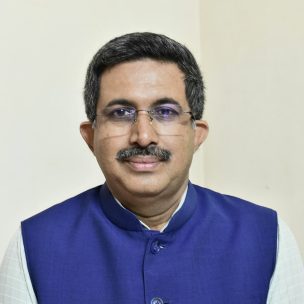
International Faculty

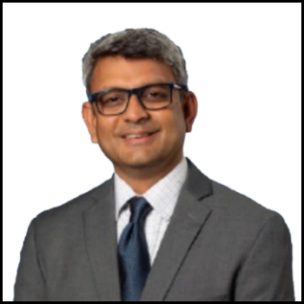
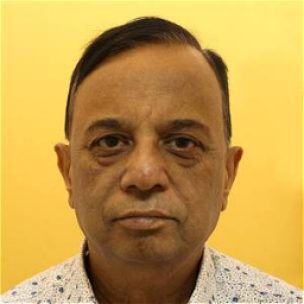
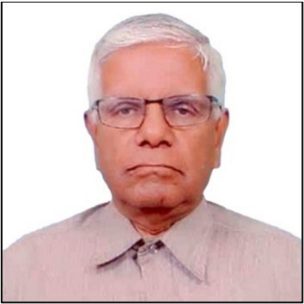
Facilities
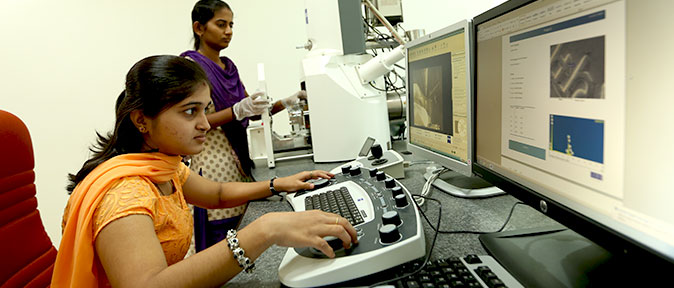
Laboratories
World-class laboratories give learning a practical dimension
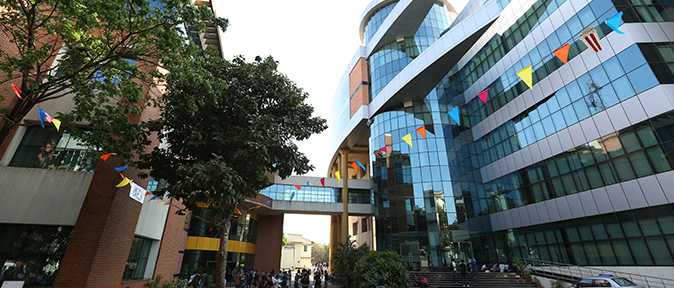
Innovation Centre
State-of-the-art Innovation Centre to facilitate multi-disciplinary research
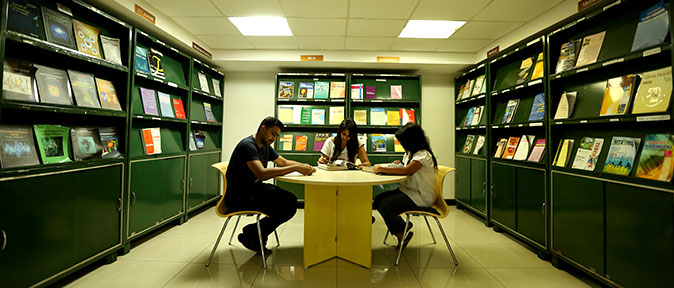
Libraries
Libraries have excellent resources for reference and study
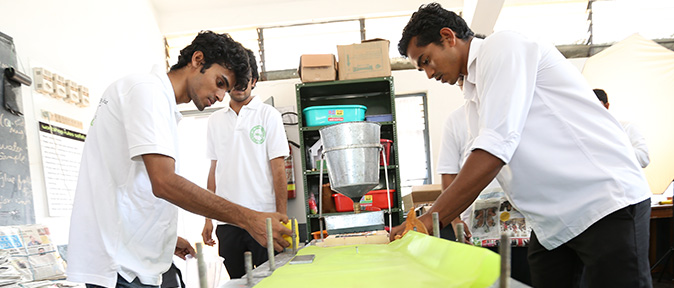
MUTBI
Paper tree - A green initiative by MIT students of MUTBI
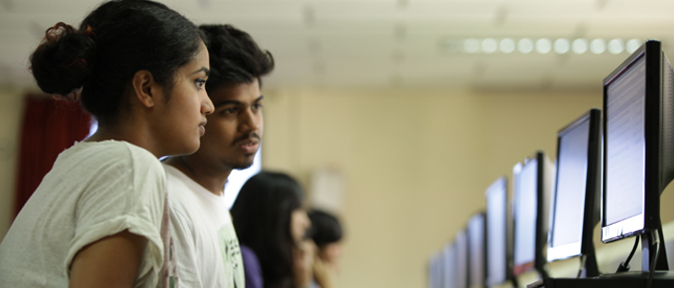
Computing Facility
Wi-fi campus with modern computing and digital facilities
Testimonials

For me MAHE is a place with ample opportunities to grow professionally and personally.
Ashna Ranjan
MIT Manipal

Learning is an awesome experience at Manipal. This is the best place to be for students.
Rudi Rajkumar
MIT Manipal

MAHE is giving us wings to fly and providing us with resources necessary to make it big in life.
Shashank Tulsyan
MIT Manipal
MAHE has taught me the value of organisation and to be systematic in all my work.
Siddharth Bhasin
MIT Manipal

My experience at MIT has been great from the beginning.
N.J.Nischal
MIT
I’m glad I choose Manipal University.
Chaitanya Chauhan
Mechanical Engineering