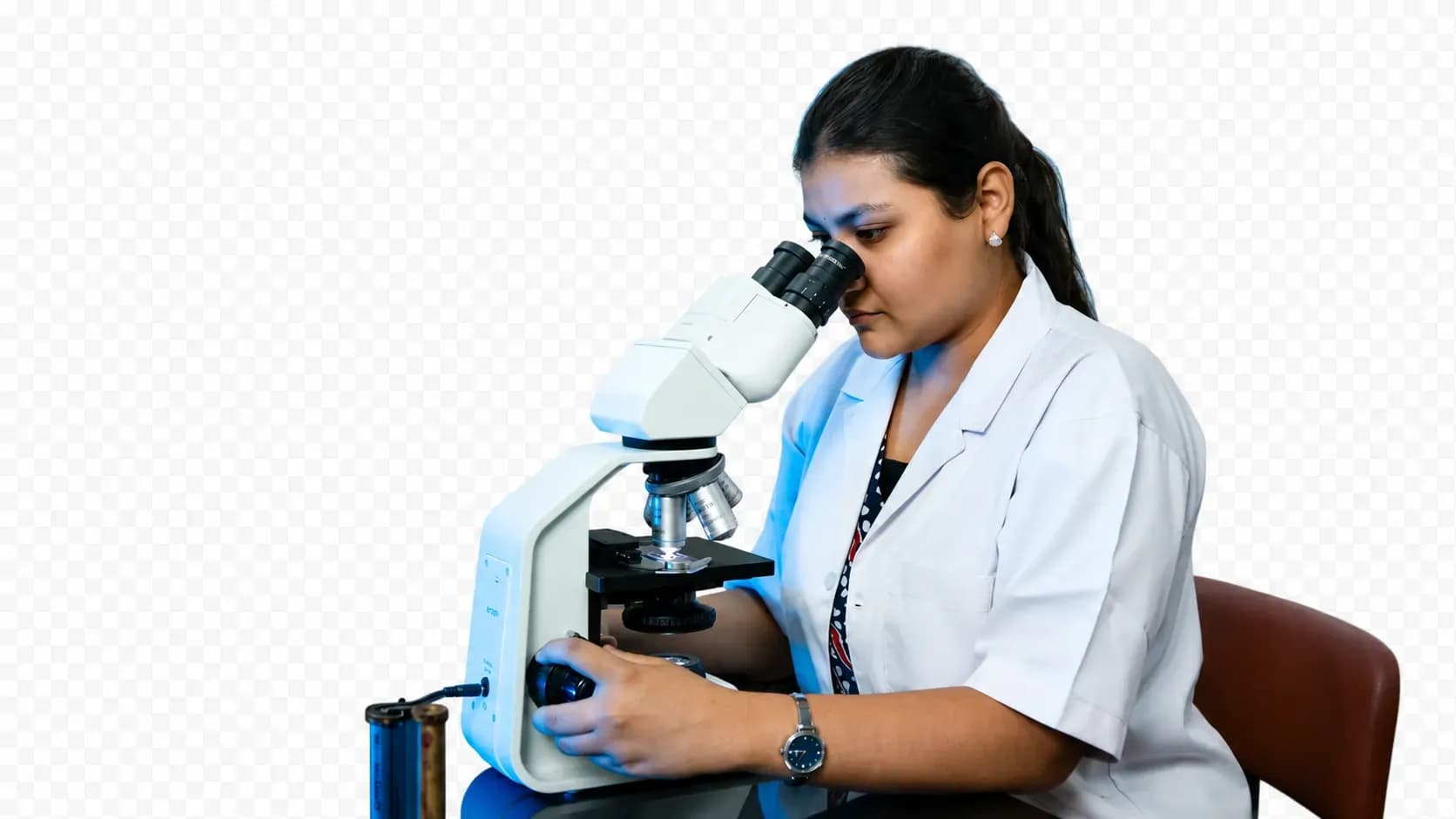
A wide range of teaching, diagnostic, research, and skills-based laboratories that support undergraduate, postgraduate, doctoral, and clinical training across basic sciences, clinical sciences, and super-specialty departments.
Anatomy
Labs
The Department of Anatomy has advanced teaching and research facilities for medical training. The spacious, air-conditioned dissection hall accommodates 300 students and includes formalin-reducing plants, regular sterilisation, and monitored formalin levels. It has cold storage for 48 cadavers, live video demonstration facilities, anatomical and embryological models, skeletons, radiology resources, and a departmental library.
The Histology Lab accommodates 125 students and is equipped with modern microscopes, projection systems, and digital learning support. The Anatomy Research Lab supports cell culture, DNA/RNA extraction, gel electrophoresis, immunohistochemistry, plastination, and 3D printing for advanced academic and research work.
Physiology
Labs
The Physiology laboratories bridge basic physiology with clinical application through practical, hands-on learning. The Clinical Physiology Lab trains MBBS and postgraduate students in clinical examination, ECG recording, spirometry, EMG, communication skills, and peer-based learning. The Haematology Lab supports teaching and research in basic and clinical haematology, with high-quality microscopes and camera-aided demonstration facilities for image analysis and quantification.
The Neurophysiology Lab, established in collaboration with Axxonet System Technologies, is equipped with a 32-channel EEG system and stimulus delivery software. The Autonomic Function Testing Lab supports heart rate variability testing, autonomic function demonstrations, diagnostics, and postgraduate research.

Biochemistry
Labs
The Department of Biochemistry has undergraduate, research, and diagnostic laboratories that support teaching, postgraduate training, PhD research, and patient care. The Undergraduate Lab accommodates 125 students and is equipped with reagents, glassware, instruments, and audiovisual aids as per National Medical Commission requirements. Students are encouraged to undertake projects and present research at academic forums.
The Research Lab has instruments such as spectrophotometers, pH meters, homogenizers, fluorimeters, and ELISA readers for postgraduate and doctoral research. The NABL-accredited Diagnostic Laboratory provides routine and specialised testing, including hormones, tumour markers, vitamins, and therapeutic drug monitoring, handling a large volume of clinical samples every month.
Pharmacology
Labs
The Department of Pharmacology has Computer Assisted Learning, Clinical Pharmacology, Experimental Pharmacology, and Research laboratories. The CAL Lab is equipped with computers, internet access, projectors, and learning software, giving students access to treatment guidelines, essential drug lists, pharmacovigilance resources, antibiotic guidelines, hospital formularies, and ethical research guidelines.
The Clinical Pharmacology Lab uses models, charts, videos, manikins, and audiovisual aids to teach pharmacodynamics, pharmacokinetics, adverse drug reactions, and drug administration techniques. The Experimental Pharmacology Lab supports postgraduate training using computer-assisted programs and demonstration resources. The Research Lab supports biochemical estimations and molecular biology-based pharmacology research.

Pathology
Labs
The Department of Pathology includes Morbid Anatomy, Histopathology, Cytopathology, Clinical Haematology, and Oncopathology sections. Its facilities support undergraduate teaching, postgraduate training, diagnostics, and research. The histopathology section is equipped with microtomes, automated tissue processors, tissue stainers, cryostats, grossing stations, and related infrastructure. The department also provides services in immunohistochemistry, immunofluorescence, HLA testing, cross-matching, and foetal and perinatal pathology.
The Clinical Haematology division has automated analysers, coagulation testing systems, flow cytometry, capillary electrophoresis, and platelet aggregometry. The undergraduate practical laboratory accommodates 150 students and is supported by demonstration rooms, projection microscopes, and multi-head microscopes for teaching.
Microbiology
Labs
The Department of Microbiology has laboratories that support infectious disease diagnostics, surveillance, public health services, training, and research. The 24x7 Critical Care Laboratory provides round-the-clock diagnostic support for critically ill patients, with prompt reporting and communication. The Advanced TB Laboratory offers fluorescence LED microscopy, GeneXpert MTB/RIF, MGIT liquid culture, Line Probe Assays, and drug susceptibility testing. It supports regional TB programmes, training, and collaborations with national and international institutions.
The HIV State Reference Laboratory and ICTC provide HIV testing, counselling, surveillance, training, and assistance to ICTCs in multiple districts. These facilities contribute to infection control, antimicrobial resistance work, and public health initiatives.

Forensic
Medicine Labs
The Department of Forensic Medicine and Toxicology has practical, post-mortem, mortuary, and research facilities. The practical laboratory supports serological analysis, bone sample analysis, fingerprint processing, ultraviolet examination, and crime scene analysis. It accommodates 60 users and is equipped with sinks, audiovisual aids, blackboards, and internet connectivity for undergraduate and postgraduate training.
The post-mortem and mortuary facility includes autopsy tables, ante-rooms, washing facilities, a doctor’s room, police inquest room, waiting hall, office space, teaching classroom, and cold storage for 15 bodies. The research laboratory supports histopathology-based forensic research using automated tissue processing and related equipment.
Community
Medicine Lab
The Department of Community Medicine has a well-equipped teaching laboratory with capacity for 125 students. It includes individual skill stations, dissecting microscopes, compound microscopes, LCD projectors, screens, computers, smart TVs, cordless audio systems, and e-learning support. The lab helps students practise public health and community medicine skills in a structured environment.
A separate Public Health Lab supports screening for common diseases in the community and provides facilities for food and water analysis. It is also equipped with an autoanalyser and GeneXpert for STI diagnosis. The facility supports undergraduate training, postgraduate learning, PhD scholar training, and community-based public health activities.

Respiratory
Medicine Labs
The Respiratory Medicine laboratories support diagnosis, monitoring, and management of respiratory and sleep-related disorders. The Pulmonary Function Laboratory provides diagnostic screening services for conditions such as asthma, COPD, pulmonary fibrosis, and other respiratory illnesses. It helps clinicians assess lung function and plan treatment effectively.
The Sleep Studies Lab conducts polysomnography, which is considered the standard test for diagnosing obstructive sleep apnoea and related sleep disorders. It records multiple physiological parameters during sleep and helps assess snoring, airflow obstruction, cardiovascular risk, and sleep-disordered breathing. The lab also supports treatment planning and follow-up for patients already diagnosed with sleep disorders.
Dermatology
Laboratory
The Dermatology Laboratory supports routine and advanced diagnostic and therapeutic services. Routine diagnostic tests include fungal scraping, slit skin smear, Gram staining, Giemsa staining, acid-fast staining, and dark ground microscopy. Advanced diagnostic procedures include direct and indirect immunofluorescence, antigen mapping for hereditary epidermolysis bullosa, and allergy testing. The department is equipped with state-of-the-art facilities for both diagnosis and treatment. It was among the early centres in the country to offer phototherapy for selected skin diseases. Therapeutic services include Bath PUVA, Narrowband UVB, targeted phototherapy, hand and foot phototherapy, and platelet-rich plasma procedures for appropriate dermatological conditions.

Orthopaedic
Skills Lab
The Orthopaedic Skills Lab was established in 2019 to provide hands-on training in basic orthopaedic procedures. It helps postgraduate students develop competency by practising on bone models and simulation-based workstations before performing procedures clinically. The lab includes four workstations with mounted bone models for fracture fixation modules, one workstation for suture techniques, and one workstation for tendon repair.
It also supports training in tendon and nerve repair skills. An interactive projector is available for demonstrations and guided learning. The facility has become an important education tool for practical orthopaedic training, especially in strengthening procedural confidence and competency among postgraduate trainees.
Ophthalmology
Lab
The Ophthalmology Research Lab provides simulation-based surgical training for undergraduate and postgraduate students. Learners practise surgical steps on simulation eyes or goat eyes under the supervision of faculty and senior postgraduates before operating on patients. The lab supports training in routine ophthalmic procedures as well as advanced surgeries such as phacoemulsification and minimally invasive glaucoma surgeries.
Advanced machines such as the Laureate phacoemulsification system are available for training. The lab also supports thesis and dissertation work, allowing students to conduct experiments and develop research skills. It is designed to nurture both surgical precision and scientific thinking among students.

Radiotherapy
Labs
The Radiotherapy Department has advanced facilities for cancer treatment, radiation planning, clinical service, and research. The Versa HD Linear Accelerator, manufactured by Elekta, supports conventional photon and electron beam radiation as well as advanced techniques such as Volumetric Modulated Arc Therapy, intensity-modulated radiotherapy, stereotactic radiotherapy, stereotactic radiosurgery, and stereotactic body radiotherapy.
Cone-Beam CT image guidance improves treatment accuracy. The machine is also used for blood product irradiation and radiation-based research. The GammaMed Plus HDR Brachytherapy Unit supports intracavitary, interstitial, surface mould, and intraluminal brachytherapy, complementing external beam radiation therapy for comprehensive cancer care.
Immuno Haematology &
Blood Bank Labs
The Immuno Haematology and Blood Bank Department has laboratories for teaching, diagnostics, therapy, quality control, and research. The Immunohematology Lab performs blood grouping, antiglobulin testing, antibody screening, antibody identification, extended phenotyping, rare blood type identification, and autoimmune haemolytic anaemia work-up.
The TTI Screening Lab tests donated blood for HIV, hepatitis B, hepatitis C, malaria, and syphilis, with ELISA, chemiluminescence, and NAT facilities. The Blood Component Separation Lab supports 100% component separation, leukofiltration, irradiation, and washing. Additional facilities include Quality Control Lab, PG Research Lab, Donor Complex, and Diagnostic and Therapeutic Lab for apheresis, coagulation monitoring, and specialised testing.

PMR
Laboratory
The Physical Medicine and Rehabilitation Department has an Artificial Limb Centre that provides prosthetic, orthotic, and assistive device services. It is one of the oldest such centres in the country and supports adults and children with limb amputations or functional disabilities. The centre manufactures custom-made upper limb and lower limb prostheses, spinal orthoses, limb orthoses, and related rehabilitation devices.
It also provides ready-made orthoses, wheelchairs, walkers, crutches, and repair services for orthoses and prostheses. Sixteen trained prosthetists, orthotists, and technicians work at the centre. Modern materials, machines, and 3D printing are used to improve accuracy and reduce delivery time.
Gastroenterology
Research Lab
The Gastroenterology Research Laboratory supports academic and clinical research in major gastrointestinal and liver diseases. Its primary research areas include inflammatory bowel disease, pancreatitis, liver cirrhosis, and hepatitis. The lab is equipped for sample preparation, processing, and storage of biological samples such as blood, urine, and tissue.
Faculty members from the department are involved in collaborative research with other MAHE institutions, including the School of Life Sciences, Manipal College of Pharmaceutical Sciences, and Manipal Institute of Virology. The lab supports interdisciplinary research and contributes to better understanding, diagnosis, and management of gastrointestinal and hepatobiliary disorders.

Cardiology
Cath Lab
The Cardiac Catheterization Laboratory at KMC Manipal provides 24x7 advanced cardiac care for patients from coastal and northern Karnataka, Goa, and Kerala. It has two Philips cath lab systems, FD 20 and FD 10, and is equipped with advanced technologies such as FFR, IVUS, OCT, and IABP. The lab supports complex coronary angioplasties including left main intervention, bifurcation angioplasty, chronic total occlusion procedures, and imaging-guided interventions.
It also performs peripheral angioplasty, device implantation, electrophysiology studies, radiofrequency ablation, valvotomies, device closures, cath studies, IVC filter implantation, TAVR, TEVAR, and other advanced cardiac procedures.
Medical
Genetics Labs
The Department of Medical Genetics has research, diagnostic, and perinatal services laboratories. The research lab supports molecular biology, cell biology, Drosophila studies, and mammalian cell culture, mainly for research on rare monogenic diseases. It also supports academic training for MSc Genetic Counselling and DM Medical Genetics students.
The NABL-accredited diagnostics lab provides genomic testing, including single nucleotide variant testing, exome sequencing, MLPA-based deletion and duplication analysis, rapid prenatal aneuploidy testing, and targeted foetal variant analysis. The Perinatal Services Lab provides foetal autopsy for pregnancy losses, helping families receive accurate diagnosis, recurrence risk counselling, and prenatal diagnosis guidance.

Infectious
Disease Lab
The Infectious Disease Research Lab focuses primarily on tropical infections. Current research areas include scrub typhus, malaria, HIV, and tuberculosis. The lab supports PhD research and departmental projects in infectious diseases. It is equipped for sample processing, storage, microscopy, rapid diagnostic assays for infectious pathogens, and hemozoin-based assays for malaria.
The laboratory strengthens clinical research by supporting investigations into diagnosis, disease patterns, and pathogen-related outcomes. It also contributes to academic training and research development within the department, particularly in areas relevant to regional and tropical infectious disease burdens.
Reproductive Medicine
& Surgery Lab
The Manipal Assisted Reproduction Centre supports advanced evaluation and treatment for subfertile couples seeking assisted conception. Backed by experienced doctors and scientists trained in reproductive medicine, the centre has been working in the field of subfertility since 1990. It offers a wide range of assisted reproduction treatment programmes and is supported by advanced technology.
The andrology laboratory provides male subfertility evaluation and semen banking for short-term and long-term storage. The embryology laboratory is equipped with modern facilities, including micromanipulation and laser hatching. These facilities make the centre one of the advanced infertility treatment centres in India.

Clinical
Embryology Lab
The Department of Clinical Embryology is a leading centre for fertility care, embryology training, and reproductive research. Its clinical wing treats a large number of infertile couples every year and offers assisted conception technologies, including preimplantation genetic diagnosis and fertility preservation for children and adults diagnosed with cancer.
The department conducts research on the biological and clinical aspects of infertility and has received grants from national and international agencies. It has collaborations with leading universities and institutes in Europe and the USA. The department also offers doctoral, postdoctoral, and customised embryology training for students, embryologists, and medical professionals.