Program Details
Gain strong knowledge in Anatomy, Physiology, Biochemistry, Genetics, and Neurosciences, through lab-based and research-led learning.
Acquire clinical exposure through observerships and hands-on training in neuroanatomy, neurology, neuroimaging, behavioural neuroscience, and applied physiology.
Develop computational expertise in Python, MATLAB, machine learning, deep learning, and AI applications for neuroscience research.
Build research readiness through group projects, thesis, and multidisciplinary team collaborations.
Graduate with eligibility for direct PhD (after Honours) and international higher education opportunities, as per NEP 2020.
Our meaningful collaborations with industry leaders and global universities enhance your career opportunities and higher education pathways.
Program Eligibility
Pass in 10+2 or equivalent with Biology, Chemistry, English, and Physics / Biotechnology / Mathematics / any other Life Sciences subject as optional subject, from a recognized Board with minimum 60% aggregate marks in Biology, Chemistry and Physics / Biotechnology / Mathematics / any other Life Sciences subject
Biology, Chemistry and Biotechnology / Mathematics / Physics / any other Life Science subject in ‘A’ Levels and English at ‘AS’ level OR Minimum 5 passes at IGCSE/ GCSE or GCE ‘O’ level examinations including English. Minimum requirement is an average of ‘C’ grade in Chemistry, Biology, and optional subject
# University of Cambridge GCE ‘A’ Levels / Edexcel GCE ‘A’ Levels / British Examining Bodies
a. Candidates who have completed 10th Grade of Indian Board and completed GCE Advanced Level (‘A’ Levels), should have minimum 3 subjects at GCE Advanced Level (‘A’ Levels) and English at the Advanced Subsidiary (AS) Level
b. Candidates are advised to check the minimum grade requirements for registration in their respective countries

Multi-exit Flexibility: Choose to graduate after 3 years (B.Sc.), continue to 4 years with research (B.Sc. Honours), or complete the 5-year integrated M.Sc. in Clinical/Computational Neurosciences.
Direct PhD Eligibility: Progress directly to doctoral studies after Honours, aligned with NEP 2020 guidelines.
Unique Dual Specialisation: Access to the only program in India that offers progression into Clinical Neuroscience or Computational Neuroscience, combining medical sciences with data-driven approaches.
Hands-on Research and Training: Learn computational tools such as Python, MATLAB, AI applications and neuroimaging for modern neuroscience research and applications.
Global Career Pathways: Opportunities in research, academia, healthcare, biotechnology, data science, neurotechnology, and international higher education.

Lab Work
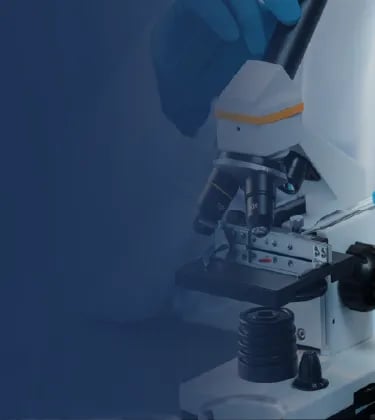
Anatomy, Physiology, Biochemistry, and Neuroscience labs with computational practice using Python, MATLAB, AI, and neuroimaging tools.
Lab Work
Anatomy, Physiology, Biochemistry, and Neuroscience labs with computational practice using Python, MATLAB, AI, and neuroimaging tools.
Admissions Path
Weightage for preparation of Merit List
MET score - 50%
10+2 examination marks - 50%
Subjects Considered for Preparation of Merit List
Biology + Chemistry + Physics / Biotechnology / Mathematics / any other Life Sciences + English in 10+2
Curriculum and Fees
During the first year, students study Molecular & Cell Biology, Basics of Human Anatomy (Theory and Practical), Basics of Human Physiology, English, and Environmental Sciences. The curriculum further includes Biochemistry, Food and Nutrition, Basics of Human Anatomy-2 (Embryology), and Surface Anatomy & Medical Imaging. Students also undertake Personal and Professional Development, which continues through vertical integration until Semester 6, along with Indian Constitution.
Program Duration
Total Program Fee (2026 Admissions)
General:
NRI/FOREIGN:
Note : Fee structure for 2027 admissions will be updated shortly
Scholarships
Manipal Academy of Higher Education (MAHE) Manipal awards scholarship for its Undergraduate (UG) and Postgraduate (PG) students under the following categories


Related Courses